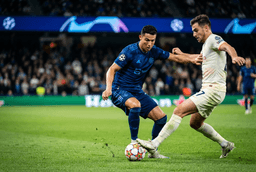
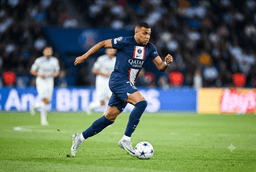
The Evolution of European Club Football: From Invitational Cup to the Swiss Model Era
At a Glance: European club football has transformed from an invitational 16-club knockout competition in 1955 to a massive, highly integrated three-tier pyramid. The pinnacle of the sport—the UEFA Champions League—along with the UEFA Europa League and UEFA Conference League, underwent their most radical structural shift in the 2024/25 season, abandoning traditional group stages for a 36-team single-league phase. This guide tracks that evolution, from Gabriel Hanot's original vision to the intense tactical and physical demands of today's "Swiss Model."
1. The Genesis: From the European Champion Clubs' Cup to Global Dominance
In the early 1950s, European club football lacked a unifying, continent-wide stage. While regional tournaments existed, there was no master competition to crown the true king of Europe.
That changed when Gabriel Hanot, editor of the French sports daily L'Équipe, proposed a radical concept inspired by the South American Championship of Champions. His vision came to life in the 1955–56 season with the launch of the European Champion Clubs' Cup.
Key Features of the Early Era
Strictly Invitational: The inaugural tournament featured just 16 clubs.
Knockout Only: No group stages existed; teams played two-legged elimination ties from start to finish.
Real Madrid's Hegemony: Led by Alfredo Di Stéfano, Real Madrid dominated the first five seasons, winning every title from 1956 to 1960.
Exclusive Access: Only domestic league champions and the defending cup holders were allowed entry.
2. Expanding the Pyramid: The Birth of the Cup Winners' Cup and UEFA Cup
As football's popularity exploded in the 1960s and 1970s, UEFA realized that restricting continental play to league champions left out too many elite teams. To feed the growing appetite of fans, UEFA introduced secondary pathways:
The Cup Winners' Cup (1960)
Established for domestic cup winners (like the FA Cup or Copa del Rey), this competition provided a unique knockout dynamic until it was eventually absorbed into the UEFA Cup in 1999.
The UEFA Cup (1971)
Replacing the non-UEFA Inter-Cities Fairs Cup, this tournament became the largest and often most competitive field in Europe. It targeted teams that finished directly below the league champion, ensuring elite representation from deep domestic leagues. This tournament was later rebranded as the UEFA Europa League in 2009.
3. The 1990s Revolution: Rebranding the UEFA Champions League
The early 1990s brought a seismic commercial and structural shift. In the 1992–93 season, UEFA officially rebranded the old European Cup into the UEFA Champions League.
This was not a superficial face-lift; it was a revolution that laid the groundwork for modern sports broadcasting.
Old Format (Pre-1992): Straight Knockout ties without guaranteed group games. New Format (1992): Group Stage followed by Knockout rounds.
The Group Stage: By introducing a group stage before the knockout rounds, UEFA guaranteed matches and television revenue for the continent's top clubs.
Expanding the Field: By 1997, UEFA began inviting runners-up from major domestic leagues, eventually expanding to four teams from elite leagues. This shift consolidated the tournament's position as the world's premier club sporting event.
4. The Modern Era: The "Swiss Model" League Phase
In the 2024/25 season, UEFA introduced the most radical change since 1992: the Swiss Model. Aimed at eliminating "dead rubber" matches and creating high-stakes blockbusters earlier in the season, this format expanded the tournament to 36 teams playing in a single league phase.
Two full seasons into this format, the results have fundamentally reshaped the sport's tactical demands. Luis Enrique's Paris Saint-Germain has dominated this era, securing back-to-back Champions League crowns in 2025 and 2026.
Structural Breakdown: Old vs. New Champions League Format
| Feature | Classic Group Stage (Pre-2024) | Swiss Model League Phase (2024–Present) |
|---|---|---|
| Total Teams | 32 | 36 |
| First Stage Format | 8 Groups of 4 | Single League Table (36 Teams) |
| Guaranteed Matches | 6 (3 opponents, home/away) | 8 (8 different opponents) |
| Knockout Qualification | Top 2 from each group advance | Top 8 advance directly; 9th to 24th play a playoff |
| Safety Net | 3rd place dropped to Europa League | Bottom 12 teams eliminated entirely |
5. The Current Three-Tier Pyramid
Today, European club football operates on a cohesive three-tier pyramid, offering continental matches to dozens of clubs across Europe:
1. The UEFA Champions League: The elite tier, crowned by back-to-back champions Paris Saint-Germain in 2025 and 2026.
2. The UEFA Europa League: The second tier, serving as a high-stakes arena won in 2025 by Tottenham Hotspur and in 2026 by Aston Villa.
3. The UEFA Conference League: The third tier, introduced in 2021, providing smaller leagues and clubs a chance to build financial sustainability and gain invaluable European experience.
The Enduring Legacy of UEFA Competitions
From its humble beginnings in 1955 to the sophisticated, data-driven Swiss system of today, UEFA's structures have continually evolved to meet commercial, tactical, and fan demands. What remains unchanged is the prestige. Whether it is the historic triumphs of Real Madrid under the old European Champion Clubs' Cup banner or modern powerhouses competing in the Swiss system, these competitions remain the absolute peak of footballing drama.
TigerScores provides a comprehensive look at the sports world with live results, detailed player analytics, and the latest trending news. Browse our website to access a complete database of scores and stats designed to keep every fan fully informed and engaged.


Eala faces Zheng in DC opener amid fitness questions
FiberXers bring back Franklin
UST completes perfect run, captures first SCNI crown at Benilde's expense
Elasto Painters avenge semifinal loss, down Gin Kings
Road Warriors stay unbeaten, hand Beermen first loss
Playoff atmosphere takes center stage in PBA doubleheader
Risers cruise past Hacienderos to bolster playoff bid
Dyip outlast Tropang 5G in overtime, snap three-game skid
Dy shines on birthday as High Speed Hitters hold off Flying Titans
Cao fuels Macau's 19-point comeback, lifts Pandas past Giant Risers