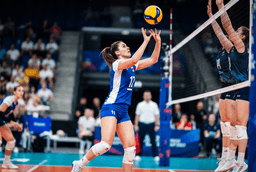
Mastering the Volleyball Jump Serve Technique: A Kinetic Chain Guide
The jump serve has evolved from a high-risk gamble into a foundational scoring weapon in modern volleyball. It transforms a static restart of play into an aggressive offensive attack. While it appears to be a pure display of athletic power, mastering the volleyball jump serve technique relies entirely on a precise sequence of kinetic energy transfer.
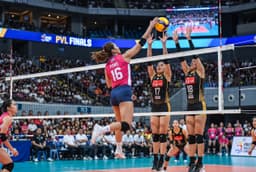
Whether you are an athlete refining your mechanics or a tactical analyst dissecting top-tier performances in elite professional leagues like the Premier Volleyball League (PVL), understanding the biomechanics behind this action is the essential first step toward total execution.
The Kinetic Chain in Volleyball Serving
To build a reliable serve, athletes must understand the kinetic chain in volleyball. The kinetic chain describes how individual body segments coordinate in sequence to produce and transfer force. Energy generated from the floor travels upward through the kinetic links starting with the lower body drive, moving into core and hip rotation, and finishing with upper body whip.
Any breakdown in this transfer—such as poor footwork, a collapsed knee, or early trunk rotation—causes energy leakage. When energy leaks occur, the upper body must compensate, which drastically reduces speed and increases the risk of shoulder impingement.
Athletic Movement Sequencing: The Approach & Takeoff
The foundation of high-velocity serving lies in dynamic athletic movement sequencing. The approach transforms horizontal momentum into explosive vertical elevation through three main phases:
1. Controlled Acceleration
The approach begins with rhythmic, deliberate steps. The athlete gradually builds speed to ensure maximum acceleration right at takeoff.
2. The Penultimate & 'Brake' Step
The second-to-last step (penultimate step) must be long and low to lower the athlete's center of gravity. This is immediately followed by a plant step (the "brake step") that arrests horizontal motion and converts forward speed into vertical force.
3. Explosive Takeoff & Hang Time
Decelerating rapidly allows the legs and core to load like a compressed spring. A well-timed plant maximizes jump height and hang time, enabling the server to strike the ball at peak vertical reach.
Maximizing Volleyball Serving Power Through Arm Swing & Core Rotation
Generating elite volleyball serving power requires coordinated timing between the trunk and upper extremity.
Arm Loading Position
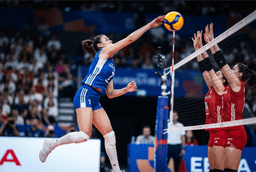
At the peak of the jump, the hitting arm should draw back into a high "bow-and-arrow" position. The elbow remains high and the shoulder externally rotates. This stretches the pectoral muscles and anterior deltoids, setting up a stretch-shortening cycle (SSC) for explosive muscle contraction.
Sequential Core Rotation
Core muscles initiate the whip-like delivery. The hips rotate forward first toward the court, followed closely by the torso and shoulder axis. This differential rotation between hips and shoulders creates elastic energy in the core, snapping the hitting arm forward with extreme velocity.
Contact Point, Topspin & Follow-Through Mechanics
The point of contact is the single most critical variable governing accuracy and trajectory.
Contact must occur slightly in front of the body at peak jump height. Striking the ball too low shrinks your margin of error over the net, while contacting it behind the head bleeds force and causes the ball to sail out of bounds.
The hand strikes near the bottom-middle of the ball, finishing with an aggressive wrist snap over the top. This imparts heavy topspin, causing the ball to dip sharply into the opponent's court.
The hitting arm must continue down across the body toward the opposite hip. A complete follow-through dissipates kinetic forces safely, protecting the rotator cuff and labrum from deceleration injuries.
Kinetic Chain Phase & Fault Matrix
| Phase | Kinetic Goal | Primary Muscle Groups | Common Mechanics Fault | Fix / Cue |
|---|---|---|---|---|
| Approach | Convert horizontal momentum to vertical lift | Calves, Quadriceps, Gluteus Maximus | Stiff penultimate step; lack of acceleration | "Drive low into the brake step" |
| Loading | Store elastic energy in core and chest | Rectus Abdominis, Obliques, Pectorals | Dropped elbow; late arm draw | "Thumb to ear, elbow high" |
| Acceleration | Sequentially whip hip to torso to arm | Core, Anterior Deltoid, Triceps | Hips and shoulders rotating simultaneously | "Lead with the hips, whip the hand" |
| Contact | Maximum force transfer with topspin | Flexor Carpi Radialis, Palmaris Longus | Broad-face slap without wrist snap | "Snap over the top of the ball" |
Targeted Drills to Improve Serve Mechanics
1. The Toss-and-Catch Jump Drill
Focuses on approach timing and peak contact height. Perform a full jump serve approach, but instead of striking the ball, catch it with your non-dominant hand at the absolute peak of your jump.
2. Wall-Snap Topspin Drill
Focuses on wrist snap and topspin creation. Stand 3–4 feet from a wall. Toss the ball lightly and snap your wrist over the top to bounce the ball sharply into the floor so it rebounds high off the wall.
Frequently Asked Questions
What causes a loss of power in the volleyball jump serve?
Loss of power usually stems from energy leakage in the kinetic chain. The most common culprits are early trunk rotation, a soft brake step during the approach, or contacting the ball while descending rather than at peak height.
How do I get more topspin on my jump serve?
Topspin is generated by contacting the bottom-middle of the ball with an open, relaxed palm and forcefully snapping the wrist over the top at contact. Proper athletic movement sequencing ensures the arm whips fast enough to generate heavy ball rotation.
How can I prevent shoulder pain when jump serving?
Ensure your core rotation leads your arm swing rather than pulling exclusively with the shoulder. Additionally, always allow a full follow-through across your body to decelerate the arm safely, and incorporate rotator cuff stabilization exercises into your training routine.
Track every spike and set with TigerScores, your go-to source for live volleyball scores and tournament updates. Visit our site to stay informed on the latest match results, team rankings, and player performances across the professional and collegiate circuits.


Mastering the Volleyball Jump Serve Technique: A Kinetic Chain Guide
How Player Tracking Technology & Basketball Analytics Reshape Modern NBA Strategy
Jayson Tatum Career Stats, MVP Candidacy, and Legacy as a Boston Celtics Star
Bataan Risers vs Bulacan Kuyas: MPBL Luzon Division Preview, Rosters & Schedule
Quezon Huskers vs Iloilo United Royals: MPBL Basketball Game Preview & Roster Analysis
Mastering Basketball Defense Strategy: The Physics of Box-Out Technique & Rebounding
Volleyball Back-Row Tactics: How to Master the Pipe Attack & Elevate Your Offense
Top Classic Premier Volleyball League Provincial Tour Matches
Volleyball Floor Defense: Essential Backcourt Drills & Training Guide
Mastering Volleyball Setter Strategy: Advanced Setter Distribution Tactics & Offensive Tempo